Author name: Sripriya Mathan

Spring Boot Annotations That Confuse Most Developers

Spring Boot annotations are used to define beans, manage dependency injection, and structure applications using the Spring IoC container. Quick Answer Spring Boot provides several annotations such as @Component, @Service, @Repository, @Autowired, @Bean, @Qualifier, and @Primary to manage dependency injection and bean creation. Understanding when and where to use these annotations helps developers design cleaner, […]

Spring Boot Annotations That Confuse Most Developers Read More »
Top Java Features from Java 9 to Java 21 Every Modern Developer Must Know

Top Java Features from Java 9 to Java 21 Every Modern Developer Must Know

Quick Answer Java has evolved significantly from Java 9 to Java 21, introducing powerful features such as modules, JShell, local variable type inference, records, sealed classes, virtual threads, and sequenced collections. These features focus on improving performance, scalability, readability, and overall developer productivity in modern Java applications. Introduction When Java 8 was released, developers widely

Top Java Features from Java 9 to Java 21 Every Modern Developer Must Know Read More »

Understanding @Value, @ConfigurationProperties, and @PropertySource in Spring Boot

When working with Spring Boot applications, external configuration is key to building flexible and maintainable software. Instead of hardcoding values, Spring provides annotations to inject configuration from .properties or .yml files. The three most commonly used annotations are: @Value @ConfigurationProperties @PropertySource In this blog, we’ll break down their purpose, usage, and best practices with examples.

Understanding @Value, @ConfigurationProperties, and @PropertySource in Spring Boot Read More »

How to Create a Multimodule Maven Project in Spring Tool Suite and Add Existing Microservices

Introduction When you start building microservices with Spring Boot, it’s common to create each microservice as a standalone project. For small setups with just one or two services, this works fine. But once you’re in an enterprise-level e-commerce project with 5–6 microservices, managing them separately becomes messy — especially when generating JARs and deploying with

How to Create a Multimodule Maven Project in Spring Tool Suite and Add Existing Microservices Read More »

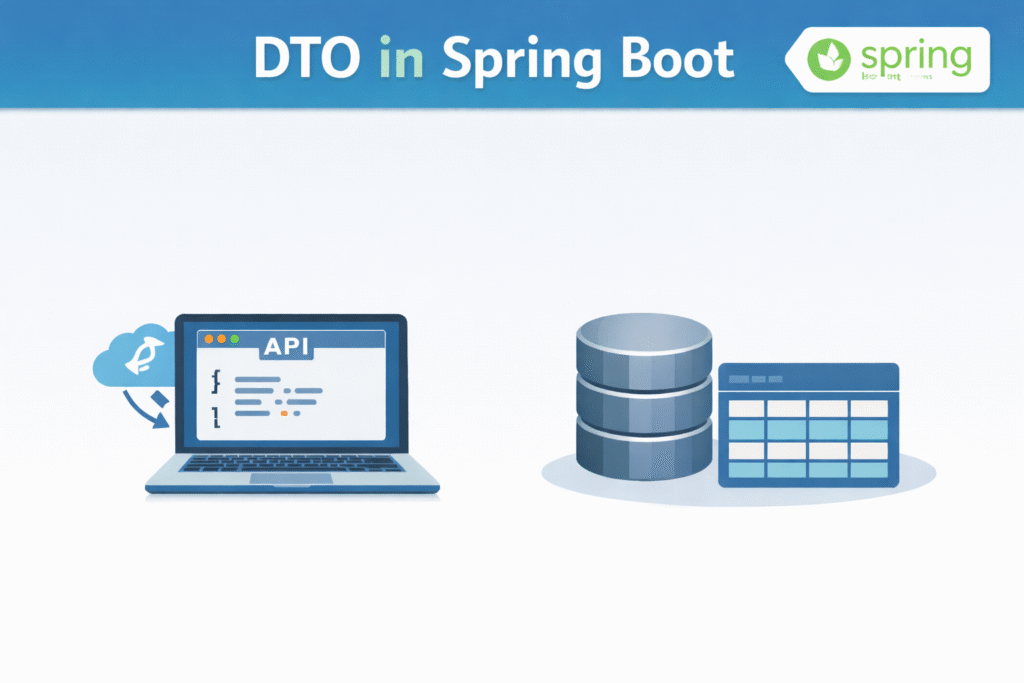
DTO in Spring Boot

DTO in Spring Boot ↔ Entity Conversion Made Easy in Spring Boot Using ModelMapper

Introduction DTO in Spring Boot is a best practice for building secure, scalable, and maintainable REST APIs by preventing direct exposure of JPA entities.When building REST APIs in Spring Boot, using DTO in Spring Boot is one of the most common and recommended approaches to separate entities from API requests and responses. Directly exposing Entities is

DTO in Spring Boot ↔ Entity Conversion Made Easy in Spring Boot Using ModelMapper Read More »

Default and Static Methods in Java 8 – A Complete Guide with Examples

 Java 8 introduced several powerful features that changed the way we write code. Among these, default methods and static methods in interfaces stand out as important additions. Before Java 8, interfaces could only contain abstract methods. With default and static methods, Java provided flexibility to add new functionality without breaking existing implementations. In this article,

Default and Static Methods in Java 8 – A Complete Guide with Examples Read More »

Scroll to Top